Call Today:




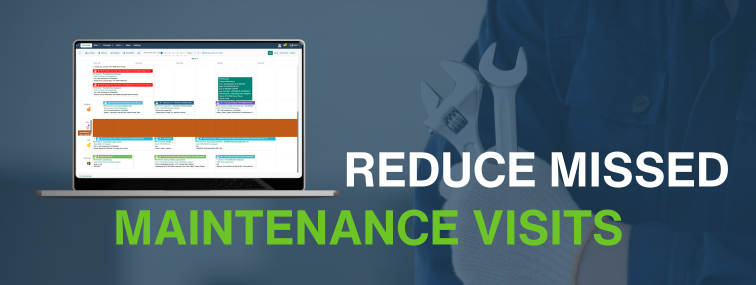
EZ Management supports this through solutions such as ezLite & ezPro,Planned Preventative Maintenance Software, and Service Job Scheduling Software, helping field service businesses manage jobs, engineers, and maintenance schedules from one connected platform.
Why Missed Maintenance Visits Matter
Maintenance visits are not just entries on a calendar. They are often tied to service agreements, safety obligations, customer retention, asset performance, and compliance records. According to the Health and Safety Executive (HSE), maintenance is carried out to prevent problems, fix faults, and ensure equipment works effectively. In other words, missed maintenance is not simply an admin nuisance. It can increase the risk of equipment failure, unsafe conditions, and avoidable disruption.
| Area | Impact of Missed Maintenance Visits |
| Customer service | Customers lose confidence when visits are forgotten, delayed, or rearranged at short notice. |
| Compliance | Missing inspection or service records can create serious problems during audits or reviews. |
| Engineer productivity | Engineers waste time chasing unclear schedules, duplicate bookings, and failed access visits. |
| Revenue | Missed jobs can delay invoicing, reduce contract profitability, and increase unplanned labour costs. |
| Asset performance | Equipment issues may go unnoticed until they become urgent, expensive, or disruptive. |
| Planning | One missed visit can have a knock-on effect across the rest of the day or week. |
For businesses in fire protection, alarms, security systems, HVAC, refrigeration, facilities management, medical devices, and property maintenance, missed visits can be especially damaging because service frequency and record keeping are often linked closely to contract obligations and customer expectations.
Common Reasons Maintenance Visits Get Missed
1. Manual Scheduling
Manual scheduling works when a business handles only a small number of jobs each week. Once there are several engineers, multiple customer sites, recurring visits, emergency call-outs, and service contracts in play, manual planning becomes fragile. Jobs get buried in inboxes, duplicated, assigned incorrectly, or forgotten altogether.
That is where service job scheduling software becomes important. A proper scheduling platform gives office teams one place to log, assign, track, and update jobs without relying on separate spreadsheets or disconnected calendars.
2. No Automated Reminders
If upcoming maintenance visits depend on someone remembering to review the schedule manually, errors are inevitable. Automated reminders reduce the chance of a visit being missed because somebody was busy, off sick, or distracted by more urgent work.
3. Poor Visibility of Recurring Jobs
Recurring jobs sit at the heart of many maintenance businesses. Weekly, monthly, quarterly, six-monthly, and annual visits all need to be scheduled accurately and consistently. Without a proper PPM system, those visits can easily be missed or delayed.
Planned Preventative Maintenance Software helps automate recurring service management workflows so scheduled maintenance does not depend on manual diary checks.
4. Engineer Availability Is Not Clear
If office staff cannot see where engineers are, what jobs they are working on, and how much capacity they have, scheduling becomes guesswork. This leads to missed jobs, unrealistic routes, late arrivals, and poor use of engineer time.
5. Customer Communication Is Weak
Sometimes the job is booked correctly, but the customer is not informed properly. The engineer arrives and nobody is available, access has not been arranged, or the customer claims they were never notified. Technically the visit was attempted. Practically, it achieved nothing at all. A triumph of bad communication.
6. Paper-Based Job Records
Paper job sheets and manual forms slow everything down. Office staff may not know whether a visit was completed until paperwork comes back, making it harder to spot incomplete jobs, failed visits, or follow-up actions quickly enough.
How to Reduce Missed Maintenance Visits
1. Centralise All Maintenance Scheduling
The first step is to bring maintenance planning into one central system. When schedules are spread across emails, spreadsheets, shared calendars, notebooks, and people’s heads, nobody has a complete view of what is happening.
A central scheduling system should show:
- upcoming maintenance visits
- engineer availability
- job priority
- customer site details
- recurring maintenance contracts
- overdue visits
- job status updates
For smaller service companies, ezLite is designed to provide cloud-based scheduling, job dispatch, and PPM maintenance software without unnecessary complexity.
2. Use Planned Preventative Maintenance Workflows
Planned Preventative Maintenance, or PPM, is one of the most effective ways to reduce missed maintenance visits. Instead of waiting for equipment to fail or relying on someone to manually create each visit, PPM allows maintenance work to be planned in advance based on defined service intervals.
This is not just operationally sensible. According to McKinsey, organisations managing distributed fixed assets can improve labour productivity by focusing on preventive maintenance, reducing unnecessary maintenance trips, and improving knowledge sharing.
| Workflow Element | Why It Helps |
| Recurring job setup | Automatically creates future visits and reduces manual admin. |
| Asset records | Shows what equipment needs servicing and when. |
| Service intervals | Keeps visits aligned with contract requirements. |
| Engineer assignment | Makes responsibility clear and reduces missed handovers. |
| Job history & Asset logs | Shows what was completed previously and what still needs attention. |
| Reminders | Reduces the risk of visits becoming overdue. |
| Reporting | Helps managers track completed, outstanding, and missed maintenance visits. |
EZ Management’s Planned Preventative Maintenance Software helps service companies manage recurring visits more consistently and keep scheduled work visible across the business.
3. Automate Maintenance Reminders
Automated reminders reduce the risk of maintenance visits being missed because somebody forgot to check the schedule. Reminders can be used for upcoming visits, engineer job assignments, customer appointment confirmations, overdue jobs, contract renewal dates, and incomplete job sheets.
The advantage is consistency. Every job follows the same process rather than relying on someone to manually check every detail at exactly the right moment.
4. Track Technician Availability and Job Status
If you want fewer missed visits, you need better visibility of your engineers. That does not mean micromanaging them. It means having enough real-time job information to schedule work properly and react when something changes.
Useful visibility includes assigned jobs, completion status, current workload, route information, job notes, and follow-up requirements. EZ Management supports this through connected office and field workflows, including mobile job updates and engineer tools that improve communication across the operation.
5. Keep Customer Communication Clear
Customers should not have to chase your office to find out when a maintenance visit will take place. Clear communication reduces failed visits, improves satisfaction, and helps avoid wasted engineer time.
A strong communication process should include appointment confirmations, engineer arrival windows, pre-visit reminders, access requirements, site contact details, and updates if the engineer is delayed.
6. Link Maintenance Visits to Asset Records
A maintenance visit should not exist in isolation. It should be linked to the asset or equipment being serviced. Engineers need to know what asset they are working on, where it is located, when it was last serviced, what faults were found previously, and whether there are recurring issues.
This is also supported by wider best practice. The BSI guidance on ISO 55001 explains that good asset management helps organisations manage risk, cost, safety, and performance throughout an asset’s lifecycle.
Connecting jobs to asset data through asset tracking and maintenance management software makes maintenance planning more accurate and gives engineers better context onsite.
7. Use Digital Job Sheets Instead of Paper
Paper job sheets slow everything down. They can be lost, damaged, misread, or returned days later. Digital job sheets help reduce missed visits by updating job information faster and more accurately.
Digital forms allow engineers to capture:
- job completion status
- maintenance checks
Asset checks - parts used
- customer signatures
- photos
- risk notes
- follow-up actions
This gives office teams faster visibility of completed work, incomplete visits, and outstanding actions, rather than waiting for paperwork to come back at the end of the day or week.
8. Create a Daily Schedule Review Process
Software helps, but process still matters. A short daily review of the schedule can prevent many missed visits. The office team should check the day’s workload before engineers start work and look for obvious risks.
| Daily Check | Question to Ask |
| Unassigned jobs | Are all of today’s visits allocated to an engineer? |
| Engineer workload | Is anyone overloaded or underused? |
| Customer access | Are access details confirmed? |
| Parts or equipment | Does the engineer have what they need before leaving? |
| Travel time | Is the route realistic for the day’s workload? |
| Overdue jobs | Are any maintenance visits already late? |
| Failed visits | Were any jobs not completed yesterday and still need action? |
| Urgent call-outs | Will emergency work disrupt planned maintenance? |
9. Monitor KPIs That Reveal Missed Visit Risks
To properly reduce missed maintenance visits, track the right metrics. Useful KPIs include missed visits, overdue maintenance jobs, first-time completion rate, failed access visits, engineer utilisation, recurring job completion rate, and jobs completed outside SLA.
These metrics help reveal whether the underlying problem is scheduling, communication, PPM setup, or uneven workload planning.
10. Make It Easy to Reschedule Failed Visits
Even with a strong system, some visits will fail. Customers may cancel. Engineers may be delayed. Emergency work may disrupt the day. Reality remains stubbornly uncooperative.
The aim is not to pretend this never happens. The aim is to make rescheduling quick, visible, and controlled. A good rescheduling process should include failed-visit reason codes, automatic notifications to the office, customer follow-up, new appointment options, updated job notes, and a clear audit trail.
Best Practice Workflow for Reducing Missed Maintenance Visits
| Step | Action | Tool or Process Needed |
| 1 | Create a recurring maintenance job | PPM software |
| 2 | Link job to the customer site and asset | Asset tracking |
| 3 | Assign the job to engineer | Scheduling software |
| 4 | Send customer confirmation | Automated communication |
| 5 | Notify engineer | Mobile app or job dispatch |
| 6 | Complete the job onsite | Digital job sheet |
| 7 | Capture signature, photos, and notes | Mobile forms |
| 8 | Update job status | Engineer app |
| 9 | Review failed or incomplete jobs | Office dashboard |
| 10 | Reschedule if needed | Scheduling workflow |
How EZ Management Helps Reduce Missed Maintenance Visits
EZ Management is designed for field service companies that need to manage jobs, engineers, maintenance schedules, and service workflows from one connected system.
For businesses that need a simpler scheduling and dispatch solution, ezLite /ezPro ( or ezServiceHUB platformprovides cloud-based scheduling, job dispatch, and PPM maintenance software.
For companies with more complex service management needs, ezPro offers an end-to-end cloud-based field service management solution tailored to service business requirements.
For maintenance businesses specifically, Planned Preventative Maintenance Software helps automate recurring service workflows and improve visibility across planned maintenance activity.
Instead of relying on disconnected systems, service teams can manage recurring maintenance visits, engineer scheduling, job dispatch, customer communication, field updates, mobile forms, asset records, job tracking, and service history in a single platform.
Final Thoughts
Missed maintenance visits are rarely caused by one dramatic failure. More often, they come from small process gaps: a manual reminder, an unclear schedule, a missing job sheet, weak customer communication, or a recurring job that was never set up properly.
The solution is to make maintenance visits visible, repeatable, and easier to manage. By combining proper scheduling workflows, automated reminders, technician tracking, recurring job management, digital forms, and clear customer communication, field service companies can reduce missed visits and protect both customer relationships and contract profitability.
Want to reduce missed maintenance visits and improve scheduling control?
Explore ezLite, ezPro, and Planned Preventative Maintenance Software to see how EZ Management helps field service businesses stay organised and on schedule.