Call Today:




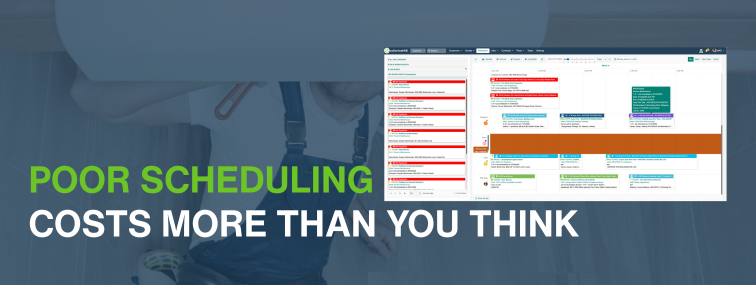
Poor job scheduling rarely shows up as one dramatic failure. It usually arrives as a collection of smaller problems that feel manageable on their own. An engineer runs late. A customer waits too long for an update. A job is assigned without the right parts. A second visit becomes necessary. An invoice goes out later than it should. The office spends half the afternoon calling people to work out where everything stands.
None of those issues look catastrophic in isolation. Together, they quietly drain profit, reduce productivity, frustrate customers, and make the working day harder than it needs to be. That is why scheduling is not just a diary problem. It is an operational control issue.
EZ Management supports service businesses with service job scheduling software, ezPro, jobs and field worker tracking software, the native app for field service engineers, and automated invoicing software for service jobs. These connected tools are built to help field service companies manage jobs, engineers, and service delivery with more visibility and less wasted effort.
The real cost of poor scheduling is not only missed appointments. It includes engineer downtime, unnecessary travel, delayed invoicing, double bookings, weaker customer communication, and a daily level of avoidable chaos that businesses often accept for far too long.
Why scheduling has a bigger impact than most teams realise
In field service, scheduling shapes almost everything else. It affects whether the right engineer arrives with the right information, whether the customer is ready, whether follow-on work is raised quickly, and whether the office has a clear picture of the day as it unfolds.
McKinsey notes that AI-driven schedule optimisation can reduce employee downtime, improve productivity, and minimise schedule-related service disruptions. In a separate field-force analysis, McKinsey also says dynamic dispatch can free up capacity and significantly reduce travel time. That matters because poor scheduling not only wastes time in the office. It wastes capacity across the whole operation.
Scheduling weakness | What it causes | Why does it cost money |
Late or unclear job allocation | Engineer downtime, rushed decisions, missed visits | Less productive time and more avoidable admin |
Poor route planning | More travel, late arrivals, wasted fuel | Higher labour and vehicle costs |
Double bookings or unrealistic diaries | Delayed work, disappointed customers, staff frustration | More rebooking and weaker service performance |
Weak communication between office and the field | Confusion, missed updates, repeated calls | Office time is spent chasing rather than managing |
Jobs not closed properly | Delayed paperwork and billing | Cash flow slows down |
If the scheduling process is weak, the business ends up paying for the same job more than once: once in labour, once in admin, and once again in lost efficiency.
1. Missed appointments are only the visible part of the problem
Missed appointments are usually the most obvious sign of poor job scheduling because customers notice them immediately. But a missed appointment is often just the final symptom of a weaker process underneath. The real cause may be unclear allocation, poor job visibility, weak diary control, poor PPM planning, or a lack of clear visibility into engineer availability.
EZ Management’s service job scheduling software is designed to help service businesses manage, assign, and track maintenance and repair jobs across engineers and sites. That matters because once jobs are centralised and visible, the business has a better chance of preventing missed appointments before they become customer complaints.
A missed visit not only creates an unhappy customer. It usually creates a chain reaction:
- the job must be rescheduled
- the office has to contact the customer again
- another diary slot must be found
- the engineer may have to travel back to the same site
- other jobs may need to move to make room
In other words, one missed appointment often damages more than one day.
2. Engineer downtime is a hidden productivity leak
One of the biggest hidden costs of poor scheduling is engineer downtime. This is the paid time that disappears between jobs because the next task has not been clearly allocated, the job information is incomplete, or the schedule is not flexible enough to respond to changes.
McKinsey’s work on smart scheduling points directly to this issue by highlighting how better scheduling can reduce employee downtime and improve productivity. That should not be dismissed as a generic management slogan. In field service, every unproductive hour matters because labour is one of the highest operating costs in the business.
Engineer downtime often comes from:
- waiting for dispatch updates
- being assigned the next job too late
- arriving at a site without the right information
- discovering parts or access arrangements are missing
- having large gaps between poorly sequenced appointments
With jobs and field worker tracking software and the native app for field service engineers, office teams can maintain better visibility of job progress and engineer movement, making it easier to respond when the day changes shape. Because it always does. Schedules, like humans, rarely behave exactly as promised.
3. Unnecessary travel inflates labour and vehicle costs
Travel time is one of the most expensive forms of non-productive work in field service. It consumes paid hours, uses fuel, adds vehicle wear, and limits how many jobs an engineer can complete in a day. When scheduling is weak, travel becomes far less efficient than it should be.
McKinsey’s field-force analysis indicates that dynamic dispatch can substantially reduce travel time. Its maintenance operations work also highlights that reducing travel time, idle time, and unnecessary trips is a key lever for improving productivity. That makes poor scheduling more than a diary issue. It becomes a direct cost issue.
Weak scheduling increases unnecessary travel when:
- jobs are allocated without considering geography
- repeat visits are needed because the first visit was poorly planned
- engineers travel back and forth to depots unnecessarily
- urgent jobs disrupt the day because the schedule has no flexibility
- double bookings force last-minute rearrangement
Better scheduling does not mean chasing theoretical perfection. It means reducing obvious waste. A service business does not get paid more because its engineers spend longer in traffic.
4. Poor scheduling slows invoicing and damages cash flow
Poor scheduling often creates a second, less obvious but just as serious problem: delayed invoicing. If jobs are rescheduled repeatedly, completed late, or closed without clear information, billing slows down. The office may not know whether the work is complete, what parts were used, or whether customer sign-off has been captured.
This matters because late billing weakens cash flow. The UK government’s guidance on payment practices states that late payment is a key issue for businesses, especially smaller businesses, because it can adversely affect cash flow and even jeopardise the ability to trade. The Small Business Commissioner also highlights that e-invoicing helps organise digital records and simplify the invoicing process.
EZ Management’s automated invoicing software for service jobs is designed to help automate the invoicing process and reduce manual errors. That is especially useful when combined with better job scheduling, because completed work can move through the admin process more quickly.
Weak scheduling outcome | Billing consequence |
Engineer arrives late or the job is rearranged | Completion date moves, delaying the invoice |
Job details are incomplete | The office cannot bill accurately without chasing for more information |
Paperwork comes back late | Invoice generation is pushed back |
A second visit is required | Cash collection takes longer because the job stays open |
In short, poor scheduling does not stop costing money once the engineer leaves the site. It keeps costing money until the work is properly closed and invoiced.
5. Unhappy customers create repeat admin and lost trust
Customers do not usually see your scheduling process. They see the results of it. They notice whether the engineer arrives when expected, whether the office communicates clearly EG SMS or email pre-notification, whether the appointment needs to be rearranged, and whether they are left waiting without information.
Poor scheduling damages customer confidence by creating uncertainty. It leads to missed time windows, vague arrival expectations, repeated phone calls, and a sense that the service company is not fully in control of its operations. That is a dangerous impression in any sector, and even more so in service environments where customers depend on reliable maintenance and response times.
This is one reason why connected scheduling matters. EZ Management’s scheduling tools are built to help service businesses keep customers informed while jobs are logged and assigned. That reduces the gap between what the office knows and what the customer is told.
A badly scheduled job often creates extra customer-facing admin:
- calls to confirm whether the engineer is still coming
- emails to rearrange attendance
- complaints about missed time windows
- follow-up explanations from office staff
- erosion of trust over time
None of that appears as a neat line item in management accounts, which is exactly why it gets underestimated.
6. Double bookings create avoidable operational damage
Double bookings are among the clearest signs that the scheduling process is out of control. They usually occur when teams work across multiple spreadsheets, shared inboxes, separate calendars, or manual handovers, with no single system serving as the source of truth.
The immediate problem is obvious: one engineer cannot be in two places at once, despite what some customers seem to assume. But the broader problem is that double bookings cause avoidable disruption throughout the schedule. Jobs must be moved, customers must be contacted, and dispatchers spend time undoing damage rather than properly managing the day.
A connected platform such as ezPro gives service businesses a more centralised view of jobs, engineers, and related workflows. That improves control because staff are not relying on partial updates from disconnected systems.
7. Poor communication between the office and the field wastes time every day
Another hidden cost of poor scheduling is the volume of communication it generates. When the schedule is unclear, the office has to keep checking job status, engineers have to call back for updates, and customers end up asking the same questions repeatedly.
This is where connected tools matter. EZ Management’s native app for field service engineers is built to support on-site job completion and field-office connectivity, while job and field worker tracking software improves visibility into jobs and field workers. That helps reduce the amount of manual chasing needed to keep the day moving.
Poor scheduling increases communication overhead when:
- engineers need to confirm the next job by phone
- office staff have no real-time status updates
- customers are not updated automatically
- job notes are incomplete or unavailable
- changes to the day are not reflected clearly across the system
This kind of friction is easy to normalise because it becomes part of the daily routine. That does not make it cheap. It just makes it familiar.
How to spot the real cost of poor scheduling in your business
Service businesses often know the schedule feels messy, but they do not always measure the impact clearly. The cost becomes easier to see when you track the right signs.
Warning sign | What it may reveal |
Frequent late arrivals or PPM missed visits | Weak planning, poor route logic, or unrealistic diary allocation |
High volume of inbound “where is the engineer?” calls | Poor communication and weak schedule visibility |
Large gaps between jobs | Engineer downtime and inefficient diary structure |
Too many repeat visits | Bad allocation, missing information, or poor preparation |
Delayed invoicing after job completion | Weak job closure and disconnected admin workflows |
Office staff are constantly chasing updates | Lack of connected field visibility |
Once you can see these patterns, the scheduling problem stops being a vague frustration and becomes something you can improve systematically.
How better scheduling software helps reduce these costs
Better scheduling software helps by bringing visibility, consistency, and faster decision-making to the centre of the workflow. The office can see jobs more clearly, engineers can receive better updates, and customers can be kept informed more reliably.
EZ Management’s service job scheduling software is positioned specifically around helping field service businesses manage, assign, and track jobs more efficiently. Alongside ezPro, it sits within a wider service management platform that also integrates scheduling, invoicing, field updates, workforce visibility, and job completion.
Better scheduling helps reduce costs by:
- improving diary control
- reducing engineer downtime
- cutting unnecessary travel
- making job progress easier to track
- supporting faster and cleaner handover to billing
- reducing customer-facing confusion
- giving managers clearer operational visibility
It does not eliminate every surprise. Field service will always contain some last-minute changes, urgent call-outs, and human unpredictability. The point is to stop those normal disruptions from turning into daily disorder.
Final thoughts
The hidden costs of poor job scheduling in field service businesses are easy to underestimate because they are spread across the whole workflow. They appear in missed appointments, engineer downtime, unnecessary travel, delayed invoices, customer frustration, double bookings, and endless office chasing.
Individually, each problem can look manageable. Together, they quietly erode profits, waste labour, and make the business feel far less controlled than it should be. That is why scheduling deserves more attention than a simple diary exercise. It is a core operational lever.
Want better control of scheduling, dispatch, and job visibility?
Explore service job scheduling software, ezPro, jobs and field worker tracking software, and automated invoicing software for service jobs to see how EZ Management helps field service businesses reduce wasted time and improve workflow control.