Call Today:




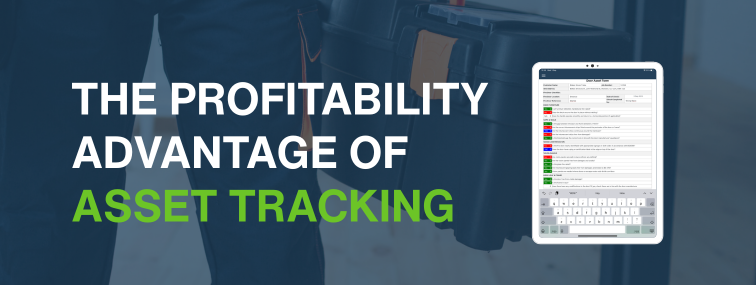
Asset tracking is often treated as an operational feature, something useful for organising equipment records and keeping engineers informed. That is true, but it undersells the real value. For maintenance companies, asset tracking is not just about visibility. It is about profitability.
When a business can see which assets it is responsible for, where they are, what service history they have, which faults recur, and when maintenance is due, it makes better decisions. Engineers arrive with more context. Recurring visits are easier to plan. Repeat failures become easier to spot. Invoices move faster because job records are cleaner. Customers gain more confidence because the service provider can explain what happened and what needs attention next. A rare and wonderful state of competence.
EZ Management supports this through asset tracking and maintenance management software, alongside connected tools such as planned preventative maintenance software, service job scheduling software, the native app for field service engineers, and mobile forms with checklists software. Together, these help maintenance businesses manage assets, service records, and ongoing field activity within a single connected workflow.
If you want to understand how asset tracking improves profitability, start with this simple truth: maintenance companies lose money when they work without context. Asset tracking gives them that context.
Why asset tracking matters beyond basic record keeping
Asset tracking is often misunderstood as a static list of equipment. In a well-run maintenance business, it should be far more useful than that. It should connect each asset to its location, service history, inspection results, previous faults, recurring issues, certificates, images, engineer notes, and future maintenance requirements.
The value of that approach is reflected in wider asset management guidance. BSI explains that ISO 55001 provides a framework for managing assets throughout their lifecycle, helping organisations optimise value while managing costs, risks, safety, and performance requirements. That is important because it shows asset management is not only about knowing what you own or service. It is about getting better value from it over time.
HSE’s (Health and Safety Executive ) guidance on maintenance of work equipment also says maintenance is carried out to prevent problems, put faults right, and ensure equipment works effectively, while its inspection guidance explains that inspections are meant to identify deterioration before it results in risk. In practical terms, maintenance companies make more money when they can act before problems become more expensive, and asset tracking supports that.
Without asset tracking | With asset tracking | Profitability effect |
Engineers arrive with limited context | Engineers can see asset history and previous issues | Faster diagnosis and less wasted time |
Recurring faults are harder to identify | Patterns become visible over multiple visits | Better decision-making and fewer repeat call-outs |
Maintenance schedules rely on memory or spreadsheets | Assets can be tied to recurring service workflows | Fewer missed visits and more contract control |
Job records are scattered | Records sit against the relevant asset | Quicker admin and easier retrieval |
Customers get vague updates | Customers get asset-specific service information | Stronger confidence and retention |
1. Asset tracking reduces wasted engineer time
One of the fastest ways asset tracking improves profitability is by reducing wasted time for engineers. If engineers arrive on-site without knowing what asset they are working on, what happened last time, what parts were used, or whether the issue has occurred before, they lose time before the real work even begins.
Microsoft’s field service guidance on building service history makes this point clearly: understanding an asset’s service history helps organisations make repair decisions, show compliance with service agreements, and keep customers happy. That same logic applies to maintenance companies that use any serious asset-tracking workflow. Service history is not a nice extra. It directly supports faster and better decision-making.
EZ Management’s asset tracking and maintenance management software is built around linking assets with maintenance management, field service records, and service history. That gives engineers more useful context before and during the visit.
Reduced wasted time usually comes from:
- seeing previous visits before arriving onsite
- understanding the asset’s fault history
- knowing what checks were carried out previously
- avoiding repeated diagnostic work
- having quicker access to customer and site-specific asset details
Time is one of the highest costs in field service. Anything that helps engineers use more of it productively tends to improve profitability, even if the improvement begins with something as unglamorous as a cleaner asset record.
2. Better asset history helps reduce repeat visits
Repeat visits are expensive. They increase labour cost, consume dairy capacity, extend travel time, and often delay billing. Some repeat visits are unavoidable, but many happen because the business did not have enough information the first time.
Asset history helps reduce that problem by showing whether the issue is new, recurring, or linked to a known pattern. If the engineer can see that a component failed twice in six months, or that the same alarm zone generated repeated faults, they are in a stronger position to recommend the right next action rather than treating every visit as an isolated event.
HSE’s inspection guidance emphasises the need to identify deterioration before it becomes a risk. Maintenance companies apply that logic both commercially and technically. The earlier they can see a pattern, the easier it is to intervene before the issue turns into more downtime, another reactive visit, or a bigger repair.
For a maintenance company, fewer repeat visits usually mean:
- more productive use of engineer hours
- better use of vehicle time and fuel
- more diary space for additional chargeable work
- lower cost per completed job
- better first-time fix performance
3. Asset tracking supports stronger planned preventative maintenance
Planned preventative maintenance becomes far more effective when it is tied to specific assets rather than to generic site records. If the business knows which assets require service, where they are, what contract they sit under, and when they were last maintained, recurring maintenance becomes easier to manage and far less dependent on memory or manual tracking.
EZ Management’s planned preventative maintenance software is designed to automate PPM contract management and recurring service workflows. When that is connected to asset data, the business gains better visibility of what needs attention and when.
This supports profitability in a few important ways:
- fewer missed service visits on contracted assets
- better control over maintenance obligations
- less admin time spent checking what is due
- more predictable engineer planning
- stronger contract delivery and customer retention
Preventative maintenance is useful precisely because it helps stop problems from becoming more expensive. Asset tracking makes that process more targeted and easier to control.
4. Faster diagnosis improves labour efficiency
Labour efficiency has a direct effect on profitability. The faster an engineer can understand the problem and carry out the right work, the more productive the day becomes. Asset tracking improves labour efficiency because it reduces the amount of diagnostic guesswork needed on-site.
A good asset record can show:
- past faults and service notes
- previous inspections and test results
- parts used on earlier visits
- whether remedial work was recommended before
- which engineer or team attended last time
SSAIB/NSI and PSA (Ireland) on asset service history, specifically noting that service history helps make repair decisions. That matters because repairs are often slowed not by the physical work itself, but by the time required to understand the situation properly. Better context shortens that stage and reduces avoidable labour costs.
The result is not just quicker work. It is a better use of skilled labour, which is one of the most expensive resources a maintenance company has.
5. Asset-linked records improve compliance and evidence
Profitability is not only about speed. It is also about control. When service records, inspections, certificates, and engineer notes are linked to the relevant asset, the business is in a stronger position to demonstrate what work was completed and when.
HSE’s inspection guidance says that the result of an inspection should be recorded and retained at least until the next inspection, and that electronically stored records should be kept securely and made available when required. That is a practical standard for maintenance companies. If records are hard to retrieve, incomplete, or disconnected from the asset itself, the business creates risk and extra admin for itself.
Asset-linked records can improve control by making it easier to:
- retrieve service evidence for a specific asset
- show maintenance continuity over time
- support audits and customer requests
- confirm whether required checks were completed
- reduce disputes around attendance and completed work
This supports profitability because stronger records reduce the time spent later chasing evidence. They also support better customer trust, which matters a great deal in contract-based maintenance work.
6. Better asset visibility helps improve scheduling and planning
Maintenance companies schedule more effectively when they understand the assets behind the work. Not all jobs are equal. Some assets are higher priority, some are part of recurring contracts, some have known repeat issues, and some require specific parts or engineer skills. Asset tracking helps the office plan around that reality.
EZ Management’s service job scheduling software supports job allocation and tracking, while its asset tracking and PPM tools help tie scheduling back to the equipment being serviced. That makes planning more useful because it is based on actual asset needs rather than generic job labels.
Better planning improves profitability when it leads to:
- fewer missed maintenance visits
- better allocation of engineer skills
- fewer unprepared first visits
- less reactive reshuffling during the day
- stronger control over recurring contracts
Good scheduling is easier when the office knows what the job is really about. Asset tracking helps provide that.
7. Cleaner records help invoices move faster
Many maintenance companies lose time between job completion and invoicing because the job record is not complete enough to bill with confidence. Notes are unclear, evidence is missing, the office does not know exactly what happened, or the work needs to be interpreted before it can be processed.
Asset tracking improves this because records are attached to the relevant asset and service history rather than sitting in isolation. When engineers use the native app for field service engineers and mobile forms with checklists software to complete digital records onsite, the office receives cleaner information more quickly.
Cleaner records support profitability by:
- reducing office time spent interpreting notes
- speeding up invoice preparation
- reducing missed billable items
- making follow-on quotations easier to raise
- supporting stronger evidence if charges are queried
The quicker a finished job becomes a billable record, the healthier the cash flow tends to look. Strange how businesses enjoy being paid on time.
8. Asset tracking improves customer retention and contract value
Profitability is not only about cutting waste. It is also about retaining good customers and delivering contracted services properly. Asset tracking helps with that because customers generally trust maintenance companies that can speak clearly about their assets, service history, recurring issues, and next steps.
Microsoft’s service history guidance emphasises that asset history helps keep customers happy. That may sound soft, but it has a hard commercial edge. Customers are more likely to renew and expand agreements when the service provider demonstrates control, consistency, and usable records.
Asset tracking supports customer value by making it easier to:
- show what has been maintained over time
- identify recurring issues before they escalate
- demonstrate the value of preventative maintenance
- support renewal conversations with actual service evidence
- respond faster to customer questions about asset condition and history
In maintenance contracts, clarity creates confidence. Confidence tends to be good for renewal revenue.
What profitability gains usually look like in practice
Asset tracking does not usually transform profitability with a single breakthrough. More often, it improves a series of smaller but important points in the workflow. Those gains stack up.
Operational improvement | Commercial effect |
Faster diagnosis from better asset history | Lower labour cost per job and more productive engineer time |
Fewer repeat visits | More capacity for chargeable work |
Stronger preventative maintenance planning | Better contract control and lower reactive disruption |
Better record retrieval | Less admin time and stronger compliance support |
Cleaner job records | Faster invoicing and fewer billing disputes |
Better customer visibility and confidence | Improved retention and stronger contract value |
How EZ Management supports asset-led profitability
EZ Management’s product structure makes it clear that asset tracking is not treated as a standalone admin tool. Its asset tracking and maintenance management software integrates with field service workflows, while planned preventative maintenance software supports recurring maintenance, and ezPro brings together broader service management workflows into a single cloud-based platform.
Combined with the engineer-facing tools, such as the native app for field service engineers and mobile forms with checklists software, this helps maintenance companies keep asset information, field activity, and service records more connected.
That is where profitability gains become realistic. Not because “asset tracking” sounds impressive in a feature list, but because it improves the way work, information, and billing move through the business.
Final thoughts
Asset tracking improves profitability for maintenance companies by reducing wasted time, strengthening service history, supporting preventative maintenance, improving diagnosis, streamlining admin, and giving customers greater confidence in the service they are paying for.
The real gain is context. When engineers, office staff, and managers can see the right asset information at the right time, the business makes better decisions and wastes less effort. That tends to be quite good for margins, even if it does sound less thrilling than most software marketing.
Want to connect asset history, maintenance records, and field service workflows more effectively?
Explore asset tracking and maintenance management software, planned preventative maintenance software, service job scheduling software, and ezPro to see how EZ Management helps maintenance businesses improve visibility, control, and profitability.