Call Today:




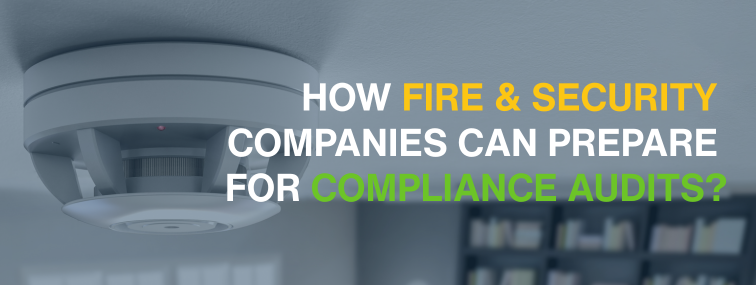
For fire and security companies, compliance audits are not a side issue. They sit close to the centre of the business. They affect certification status, customer confidence, contract eligibility, engineer accountability, and the quality of the records you can produce when somebody asks the obvious question: Can you prove the work was done properly?That matters because audits are not only about technical competence. They are also about evidence. If your business cannot quickly produce service records, maintenance logs, engineer sign-offs, asset histories, certificates, or proof of corrective actions, the problem is not just operational untidiness. It is a compliance weakness.
This matters especially in fire and security, where standards, certification schemes, and ongoing surveillance all place weight on process discipline. The SSAIB audit process states that achieving and maintaining certification requires compliance with SSAIB rules and scheme-specific criteria, and that failure to comply may result in certification not being granted or in existing certification being suspended, reduced, or withdrawn. That is a very British way of saying your paperwork and processes need to be in order before somebody else notices they are not.
EZ Management supports fire and security businesses with connected tools, including fire and security software, planned preventative maintenance software, asset tracking and maintenance management software, mobile forms with checklists software, and the native app for field service engineers. Together, these help businesses keep maintenance records, digital certificates, engineer updates, and service activity more organised and easier to retrieve.
Why compliance audits matter in fire and security
Fire and security companies operate in a sector where customers, certification bodies, and insurers tend to care deeply about whether systems were installed, maintained, and documented correctly. BAFE says its SP203-1 scheme exists to provide quality, independent evidence that providers are competent to deliver design, installation, commissioning, and/or maintenance fire detection and fire alarm services. It also states that the scheme is modular, meaning companies may be certificated for one or more modules rather than everything by default.
That is important for two reasons. First, audits are tied to real scopes of work, not vague promises. Second, a fire and security company needs to demonstrate that its work aligns with the certification scope it holds.
| Why audits matter | What it affects |
| Certification status | Your ability to maintain recognised approval and demonstrate competence |
| Customer confidence | Your ability to prove that work was completed to the expected standard |
| Contract eligibility | Your suitability for customers who require certified providers |
| Operational control | Your ability to retrieve logs, certificates, and service history quickly |
| Corrective action | Your ability to identify and resolve issues before they become repeated findings |
The NSI guidance on fire systems standards and codes of practice also states that approval by NSI requires audits against recognised British Standards and other requirements, including BS 5839-1 for fire detection and alarm systems in non-domestic premises. In plain terms, the audit is not just about whether your engineers seem competent. It is about whether your business can show it is working in accordance with the relevant framework.
What auditors usually want to see
Audits vary depending on scheme, scope, and certification body, but the broad pattern is usually similar. Auditors want to see whether the business has the right processes, whether staff are working to them, and whether there is evidence that the work has been completed and recorded properly.
BAFE’s description of SP203-1 highlights competence across design, installation, commissioning, and maintenance, while the SSAIB audit process makes clear that continuing certification depends on meeting scheme criteria. The practical message is that companies need both operational competence and usable records.
In most fire and security businesses, auditors are likely to focus on areas such as:
- maintenance logs and service records
- engineer competence, training, and accountability
- asset or system history
- inspection and maintenance scheduling
- digital or physical certificates
- non-conformance handling and corrective actions
- evidence that work is carried out within the certified scope
If your business has to dig through folders, emails, van paperwork, and shared drives every time someone asks for a certificate or a maintenance history, the real issue is not the next audit. The real issue is that your records are already too weak for the work you are doing.
1. Get your maintenance logs under control
Maintenance logs are among the first things that matter in an audit because they show what was serviced, when it was serviced, who did the work, and what was found. BAFE explains that SP203-1 includes maintenance as one of its core modules and notes that regular inspections are carried out by technicians with a comprehensive understanding of the relevant British Standards, ensuring systems remain suitable and fully operational.
That means your maintenance records need to be more than present. They need to be clear, consistent, and easy to retrieve. A maintenance log should not leave the office guessing about dates, assets, engineer actions, or follow-on work.
EZ Management’s planned preventative maintenance software is designed to automate service management workflows and help teams keep recurring work visible. For fire and security companies, this supports a more reliable maintenance process and makes it easier to show how scheduled visits are being managed.
2. Make engineer accountability visible
Audits are not only about company systems. They are also about who did the work, whether they were competent to do it, and whether there is a clear record of their involvement. That is one reason engineer accountability matters so much in fire and security.
The BAFE SP203-1 material states that specific modules require competent personnel to perform the relevant tasks, and BAFE’s guidance on qualification requirements indicates that training records can be reviewed during the surveillance audit stage. If the required qualifications are not in place, scope can be suspended and later withdrawn. That is not the sort of admin detail you want to discover halfway through an audit week.
In practice, engineer accountability means being able to show:
- who attended site
- what work they carried out
- what checks they completed
- what issues they identified
- what evidence they submitted
- whether any follow-up action was required
This is where connected field workflows become useful. With job and field worker tracking software, field activity is easier to monitor, and with the native app for field service engineers, they can complete job records and updates on-site with less reliance on paper forms or end-of-day memory.
3. Keep asset and system histories easy to retrieve
A compliance audit often becomes much easier when the business can quickly pull a full history for a system or asset. That history might include installation information, maintenance visits, faults, false-alarm trends, remedial work, certificates, and previous engineers’ notes.
EZ Management’s fire and security asset-tracking pages emphasise instant access to inspection reports, digital certificates, and full service histories for these assets. That is exactly the kind of retrieval speed that matters in an audit. When someone asks for evidence, you want seconds, not a scavenger hunt.
The asset tracking and maintenance management software page is especially relevant here because it focuses on fire and security assets and connected maintenance records. If your business manages alarms, detectors, emergency lighting, extinguishers, or other life-safety and security infrastructure, the ability to link work history to specific assets is a major advantage.
4. Standardise forms, certificates, and site records
One of the fastest ways to weaken your audit position is to let each engineer record work slightly differently. Inconsistent forms create inconsistent evidence. That makes it harder to prove that the required checks were completed and makes it easier for records to contain gaps.
EZ Management’s mobile forms with checklists software allows field teams to collect on-site data, images, and signatures digitally. That helps standardise the way engineers complete service documentation. It also reduces the chance that certificates, notes, or checklists sit in a van until somebody remembers to hand them in.
Digital reporting matters here as well. EZ Management’s security compliance content states that its forms can meet NSI, SSAIB, and BAFE requirements and that certificates and reports can be auto-generated and emailed to clients. Whether you are preparing for surveillance, a certification visit, or a customer-driven compliance review, such consistency improves control.
| Record type | Why it matters in an audit |
| Maintenance forms | Shows what was checked, what was found, and what was completed onsite |
| Digital certificates | Provides formal evidence of completed work and easier retrieval |
| Engineer signatures and notes | Supports accountability and traceability |
| Photos and attached evidence | Helps verify site conditions, defects, or completed works |
| Asset-linked service history/logs | Shows continuity of maintenance and recurring issues over time |
5. Use internal audits before external audits use you
Waiting for the certification body to find your weaknesses is a poor strategy. BSI’s internal audit guidance says internal audits should be formal, planned, and organised, carried out in an impartial and objective manner following an agreed scope and procedures. That is useful advice because it turns compliance preparation into an ongoing process rather than a last-minute clean-up operation.
A good internal audit process helps fire and security companies check whether:
- maintenance schedules are being followed
- records are complete and retrievable
- engineer forms are being completed correctly
- non-conformances are being tracked and resolved
- training and competence records are current
- the business is operating within its certified scope
Internal audits are useful not because they make the business look tidy. They are useful because they reveal recurring weaknesses before those weaknesses become external findings.
6. Prepare for recurring findings, not just one-off questions
One weak service record is annoying. A pattern of weak service records is a process problem. Audits often become more serious when recurring issues show that the business has not controlled a known weakness.
The BAFE SP203-1 scheme material includes requirements around competence and scope, while NSI’s standards guidance makes clear that companies should ensure they are working to the relevant requirements before approval audits take place. That means audit preparation should not stop at collecting documents. It should include closing gaps.
Good preparation means tracking:
- repeat paperwork errors
- missed or late maintenance visits
- engineer training gaps
- missing certificates
- outstanding remedial actions
- records that are difficult to retrieve
If the same problem appears in three different customer files, it is not a staff oversight. It is a business process issue wearing three hats.
7. Build a practical pre-audit checklist
Fire and security companies do better in audits when they prepare systematically rather than relying on a frantic document sweep the week before. A pre-audit checklist helps teams review the basics and spot obvious risks early.
| Pre-audit check | Question to ask |
| Certification scope | Are we carrying out work only within the modules and approvals we hold? |
| Maintenance logs | Can we retrieve service records quickly and consistently? |
| Engineer competence | Are training, qualifications, and role records up to date? |
| Digital certificates | Can we produce completed certificates and reports without delay? |
| Asset history | Can we see previous visits, faults, and remedial actions for each system or asset? |
| Checklist consistency | Are engineers using the same forms and required fields every time? |
| Corrective actions | Are issues tracked through to resolution, or just discussed and forgotten? |
This kind of preparation is easier when your systems are connected. With ezPro and EZ Management’s feature pages for scheduling, forms, asset tracking, and reporting, the business can move toward a single, organised workflow rather than several competing ones.
How EZ Management helps fire and security companies prepare better
EZ Management’s fire and security pages are clearly built around compliance-heavy service environments. Its fire and security software focuses on compliant solutions for fire protection, alarms, and security systems. Its planned preventative maintenance software supports recurring service management. Its asset tracking and maintenance management software supports fire and security asset history. Its mobile forms with checklists software helps standardise records. And its native app for field service engineers supports onsite job completion and evidence capture.
In practical terms, that helps fire and security companies prepare for audits by improving:
- record consistency
- digital certificate handling
- engineer accountability
- maintenance scheduling visibility
- asset-linked service history
- speed of retrieval when evidence is requested
Final thoughts
Preparing for a compliance audit in fire and security is not about performing calmly and professionally for a visiting auditor. It is about building a business that can prove what it does, show that it works within the right standards and scope, and retrieve evidence without delay.
The strongest preparation usually comes down to the same basics: clear maintenance logs, visible engineer accountability, easy-to-find asset histories, standardised forms, usable digital certificates, and internal audits that expose weaknesses before external audits do.
Want to make audit preparation easier and records easier to retrieve?
Explore fire and security software, planned preventative maintenance software, asset tracking and maintenance management software, and mobile forms with checklists software to see how EZ Management helps fire and security businesses stay organised, compliant, and audit-ready.